

The other day I had the privilege of listening in on a podcast being recorded by elders in my community. During this podcast episode, death preparation was brought up, originally in a spiritual context but the practical side could not be avoided. The truth is, no matter what your particular situation or beliefs, the fact that there will be a corpse left after you are gone cannot be avoided. What may be less obvious, or more so ignored is that we also have a duty to that corpse just as much as we have a duty to ourselves.
This responsibility may not seem important to our living selves, and may not seem to matter about our bodies when we are dead, but it can matter to the people who will guide your corpse to its final destination. Here is where personal belief might matter in this context. Understanding this delineation between your death and your duty to your own death can come in many forms, and can be a long topic in and of itself. For many, the phrase, “it won’t matter anymore because I’ll be dead.” is often the end of the conversation. For others, especially those who understand death positivity, there can be a lot more nuance. As a quick note on terminology, death positivity, and the death positive movement on a social scale is a social and philosophical movement that encourages people to speak openly about death, dying, and corpses. The movement seeks to eliminate the silence around death-related topics, decrease anxiety surrounding death, and encourage more diversity in end of life care options available to the public.
Right now, as of this writing, we are all in the middle of a global pandemic caused by the novel coronavirus COVID-19. A real plague, the likes which have not been seen since the height of the AIDs pandemic in the late 80s and early 90s. In the United States alone, over 44,000 people have died and nearly a million cases confirmed. Few have not been affected, either being sick with the virus, or a loved one or dealing with the fallout of closed businesses, shut indoors, or entire life changes in the midst of a society in the grip of this crisis.
Although fatalities are “low” in consideration of historical plagues, those lost lives were just as worthy as any others, and those losses shall be felt deeply. Psychologically, it is very difficult to wrap our minds around the numbers of those deaths, but one must just consider that so much life was lost to our reality, and there is so much to grieve. This is where death positivity, and breaking the silence around death becomes more important than ever. In many traditions, death and the process leading up to death is revered and honored with ceremony and guidance, not shoved into the back halls of a sterile and clinical hospital to be forgotten and avoided. I personally believe that as a culture we must revive the honor of death, and now, in our current “climate” is as good a time as any.
As a person with a few chronic illnesses, and some that seem to have no relief in sight, I find I must find any way possible to bring some psychological relief to what could be an otherwise gloomy existence, and ironically, death positivity is one of those. I find looking deeply into death, connecting with powers associated with death, yes including gods and goddesses, brings the whole concept out of the abstract and strips away the fear. For myself, pulling apart the process of death, considering the logistical steps of the process of death, and allowing my mind to contemplate that truth, is very comforting, and relieving. In my youth, I would have full-blown panic attacks and severe anxiety, and much of it found itself embedded in facing death. I saw my life, even as a child younger than ten, as being too fast, time eating away too quickly, myself and everyone around me would be dying too soon. I would wake up at night and have terrible screaming fits about it that my mother could just not subdue. It truly wasn’t until adulthood and joining the pagan community that this particular anxiety began to subside and I was able to accept and begin my journey into death positivity.
As most people alive today, more so in the US, were born after WWI, death is something that is quite nearly taboo in most circles. Talking about death is like, “inviting it in”, it’s not done in polite conversation. Should you bring it up once too often it is now a sign that you, “might not be ok”, morbid, obsessed, or traumatized even. Then, talking about it to your family in regards to their final wishes, well, you’re just “wanting them to die”. I remember getting some seriously strange looks from my family on our Washington, DC trip for wanting to go to the Holocaust museum. Somehow, we’ve gone from taking pictures with our deceased family members to hiding it so well that many of our young people have a subconscious feeling of being immortal. Then, when they are confronted by death, they truly do become traumatized.
This writing was originally just meant to be a list of death preparation resources, but quickly evolved into half a think piece. Ah well! Anyway, I will now get to those resources and the likely unsolicited advice therein. I will note here that this is not an exhaustive list of resources, but I think these will stand as a jumping-off point. I’ll begin with a couple of “preparations for the preparations” notes to keep in mind as you move through.
Learn the Language
As you move through these resources and others you’ll start seeing a lot of legal language that is important but can quickly become confusing. My first recommendation is to keep an extra google tab open in your browser to look up these words and keep a log of them. Most of this language is to differentiate between the different types of legal options open to you, which might surprise you. Becoming familiar with these terms, and the laws and policies behind them now will give you leverage and power later when you might not have the energy or presence of mind to start learning them.
Find the “One”

We’re not talking romantically of course. In fact, this person doesn’t even need to be related to you. When it comes to taking care of end of life items, it can seem daunting and impossible, compounded by the fact that when we usually are dealing with this business it’s during the shock and initial grief following death. Whether you are personally facing death or losing a loved one, we often find ourselves overwhelmed, and having someone able to be more focused and present during the situation, even being able to carry you through, is a gift. Finding and choosing this person now is highly recommended, because obviously hoping to or trying to find that person when the real process of death begins may find you alone. Of course, this is easier said than done.
For a couple of pointers, it needs to be someone that you can talk to freely about death in any capacity. This person should be able to have a frank and practical discussion with you, and not be emotionally disabled by the thought of you dying. I want to stress the fact that this does not mean they don’t care if you die, just the opposite. It means they will care for you despite the situation, they will care for your family and friends, and care for your remains both bodily and material when you are gone. And they will be able to do so with the presence of mind and with some organizational detail.
If you generally don’t have a lot of trustworthy friends and family, the great thing is that doesn’t matter. With an Advanced Directive, any relative, friend, decent co-worker, neighbor, or even a bartender will work. The person only needs to be someone that you know, with true certainty, will remember you and will answer the call and be there when you are dying or have died. And they’ll need to sign some paperwork and lend a little time and their name to some things. I can’t stress this enough, that despite how you feel about someone, they may not be the right person to see you through death. It’s much like an accountability partner. Your best friend might be the greatest person in your life, never leave your side, ride or die type of person, but will they know not to let the casket seller talk them into a $10,000 gold lined box? Will they know to call your credit card company and cancel the card before someone charges thousands of dollars in fruit roll-ups? Will they really understand or be able to not to let your estranged parents put you in a suit and tie when all you wanted was to wear your favorite sundress one last time?
One of the most surprising, both sad and happy situations I’ve seen is when someone is dying, and all the people come out of the woodwork and you start to notice who is actually guiding the situation. In a good situation, there’s the one, they are making the calls, filling out the forms, holding the closest next of kin’s hand, researching the details, and gently moving people along through the process, both before and after the last breath is taken. In the not so great situations, there is chaos, uncertainty, frustration, and more than a few arguments and screaming fits. Inevitably, in both situations, the deed is done, but more than likely one of those will continue with a lot more pain and grief.
Learn How to Talk to Your Family
As our parents and other relatives get older, hell, as we and our friends get older, take note if someone doesn’t seem to have a person as mentioned above. Have a conversation with them if you can. Parents are usually the most difficult, it obviously can be a difficult topic, but it doesn’t have to be awful and excruciating. Approach the people in your life that you feel this conversation needs to happen with, and converse with them in the way you think they will listen to you best. Take time to understand where they are coming from, understand the culture they grew up in. Death positivity in our parent’s era, post-WWII, just wasn’t a thing as we now know it today. There will be specific resources below to cover this topic.
Thinking Outside the Casket
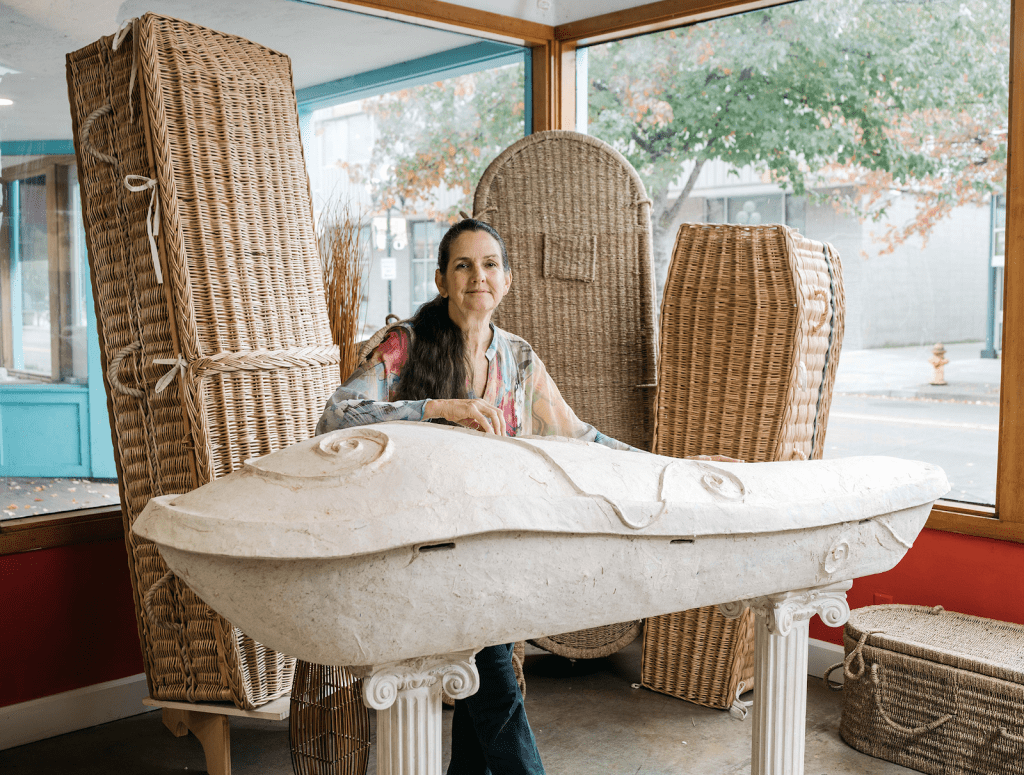
This part can actually be the most fun and engaging topic to have. The “traditional” funeral is about as traditional as a white wedding. Funerals as television sitcoms and movies show them, have only been “normal” for about the last 100 years. Dying in hospital, shuffled away to a cold fridge until you are dissected and pumped full of chemicals to make you last less than a week, then dumped inside an overly expensive box only to be placed inside a cement vault is all pretty new fashion. Same with the “funeral”, unless you are part of a minority culture, you likely know the funeral and black and somber, with a quiet viewing and some food afterward. Sprinkle in maintaining a safe distance from the corpse, not discussing the death itself, and making sure the kids don’t see too much. All at a very expensive cost of course.
The truth is, our deaths need not be as constrained as our lives sometimes feel. It may seem like death is full of ways to restrict you, and make you spend money, but besides a few key points and specific policies, your death can be as spectacular as your life, or just as comfortable. You can die at home, it’s all right, and you can have as many or as few people there as you like. Your corpse can stay in your home, and you can have your family prepare you. You do not need to be embalmed, and you don’t have a service in a funeral home. Everything can be done in your own home, even with your corpse on full display. Some people even do it in style. On the other hand, natural burials are back. Just have yourself put in a shroud or a natural casket and dig a hole in the ground. Of course for this, there must be special cemeteries that are allowed to do this, but they are out there should you want them. Also, water cremations are a thing, and there are many options nowadays, some of which are ancient and being rediscovered. Keep your mind open and give it the thought it deserves. And it’s best to do it now, and not while you actually see your death approaching you. If you are open to it, this can actually be a fun topic to have with close friends and family.
Our Responsibility to Ourselves and to Others
Finally, I want to revisit one of my original points from the beginning of this writing. What is our responsibility to ourselves and to others when it comes to death? As this could be a whole other extensive topic, I’ll try to keep it to two simple points. One: I feel we are responsible for ourselves to at least respect the remains we leave behind. Two: I feel we are responsible for those around us to respect the situation we leave them when we die.
Even if we can openly converse with our families about death, the topic can usually reach the point of, “if I end up like x, just take me out back and shoot me.” I’ve heard it a lot from friends and family, and even though it’s meant to be funny or a nod to “keep it simple”, life and death with it is always more complicated. We owe it to ourselves to give it more thought. Our lives were lived, our lives were real and raw, and hopefully for many of us, filled with long years of beautiful and tragic memories that deserve to be honored. It is thus our responsibility, that no matter what we believe lies beyond our last moments, that our empty vessels will be cared for with dignity and just a bit of planning.
As for others, if you have the opportunity to be someone’s “death friend”, for a simple term, feel honored. It will likely be one of the hardest but most rewarding things you’ll ever do. Just make sure you are prepared to do it. For most of us, this duty will come to us as our parents die, and expectations that were never understood and never fully developed suddenly come into strong relief, if death planning was never a conversation you had with them. This happened to me with my father, and I was blessed to have an Aunt who helped walk me through the process. She was my “one” without any expectation of it, but it was a true gift. Despite traditional expectations, if you think you can’t hold that space when your parents reach their journey’s end, think about that now and figure who else might be able to take this role. If you are in a minority community and/or are estranged from family, look to your friends, the family you choose, and decide now to have that conversation with them, for yourself and be that for them as well. As our world grows grayer, and more difficult times continue to come, I believe it is our responsibility to hold space for others both in life and death, as best we can.
Practical Resources
- The Order of the Good Death, as I’ve discussed quite a bit in this piece, is a substantial resource, very down to earth, and open to all of every walk of life. I swear this article isn’t a long advertisement for them, but they really are one the first and one of the few resources out there for this. They are part of the Death Positive Movement, and in fact, started the movement. Also, they are a great resource if you’ve ever wondered how to make your death “eco-friendly”. They’ve been around for nearly ten years, and will likely direct you in some shape or form to what you need to know, even if they just give you the language. Also, check out Ask a Mortician on YouTube. The Order of the Good Death: Home
- Here is a specific link to learn what Advanced Directives are and the difference between this and a Living Will (did you know a living will means nothing in Michigan?), and also the difference between these two and Advanced Care Planning. For Advanced Directives: Advance Directives: Durable Power of Attorney for Health Care
- This topic is often state-specific, so make sure to look for laws where you live or expect to be living if you know where you’ll be facing death. This link will get you started: Patients and Caregivers. There is also information here on Advanced Care Planning.
- For many of us, money is often the first and the last thing on our minds when it comes to discussing death. Large bouts of anxiety and frustration come about when it’s time to plan a funeral, pay for end of life costs, and decide who is responsible for that. On the other hand, if you fall on the lower end of the socioeconomic ladder, “assets” may seem like a funny word, and you think, “just bury me in the back yard if you have to.” Let me tell you now though, I can 99% guarantee if you are an adult with so much as a State ID, you will likely be surprised by what you find when you sit down to consider what you’ll be leaving behind when you die. If you have any money or any assets whatsoever, even a bank account, you’ll want to make sure all these things are accounted for. Nothing is more overwhelming for a loved one than trying to locate your paperwork, figure out what you own, and what you’ve been doing with your life 300 miles away after you die suddenly and you were considered homeless. Then they still have to pay to take care of your corpse (that may or may not be an actual anecdote). There is a financial trail that you’ll leave behind, and what you want to make sure is that whatever you have, even your empty wallet, isn’t lost from your loved ones should you pass suddenly. How to Prepare Financially for Your Death, No Matter How Young You Are
- As I mentioned above, it’s important to learn how to talk about death with your family. Again, Ask a Mortician, Caitlin Doughty helped me out the most here: Ask a Mortician: This Season’s Hottest Trend Is…
- For those a bit more local to Michigan, the University of Michigan offers great resources in the medical aspects of death: Care at the End of Life
Update and Plan B

Finally, when all is said and done, and you’ve crossed that last T and dotted that last I, and made sure it was all saved in your Google Drive, set yourself some reminders. More than likely, and hopefully, you won’t actually die soon, despite the world on fire, so set yourself a reminder to look these plans over every few years and update them, especially with important life changes, like a new child, change of partner, or loss of a person integral to these plans. You may even want to consider a “Plan B” person, to list “in case of” if you so have someone. Making sure to update these plans, and discussion of worst-case scenarios may actually be the hardest part in all this, but this exercise also helps to keep reality fresh, and the acceptance and growth alive along with it. No pun intended.
I won’t go into specifics regarding death and COVID-19, as the multi-medias are flooded enough with that information right now and it’s ever-evolving. I’ll leave that to the experts over at The Order of the Good Death, who have already done a few excellent pieces on this specific topic already.
What I will say is, during this time of isolation, uncertainty, and fear, thoughts of death come bubbling up in unexpected ways. For some, there is simply too much time to think. However, this also gives us time to grow as humans in new and positive ways. Let’s make “meeting death as a friend” one of them. We may in fact die alone, but we don’t have to feel that way.
 A Mindful Repose